William also has a list here. As a result, we end up with 2 files — the virtual disk descriptor file, and the virtual disk itself: Howard on June 28, This website uses cookies to improve your experience. You could also specify the file provisioning type when you clone the virtual disk. March 19, 0. We use vmkfstools -E to do this:.

| Uploader: | Zulut |
| Date Added: | 24 March 2008 |
| File Size: | 19.93 Mb |
| Operating Systems: | Windows NT/2000/XP/2003/2003/7/8/10 MacOS 10/X |
| Downloads: | 60919 |
| Price: | Free* [*Free Regsitration Required] |

Virtual Disks vmkfstools vSphere. April 4, 0.
Views View View source History. To create a virtual disk we can run vmkfstools -c m testdisk1.
Linux, FreeBSD, Juniper, Cisco / Network security articles and troubleshooting guides
vmfkstools First of all we have to extent the partition. Extending a Virtual Disk vmkfstools can be used to extend the size of the Virtual Disk similar to how extending the size using the thick client or Web Client by going to Edit Settings of the Virtual Machine. Creating vmfs5 file system on "mpx.
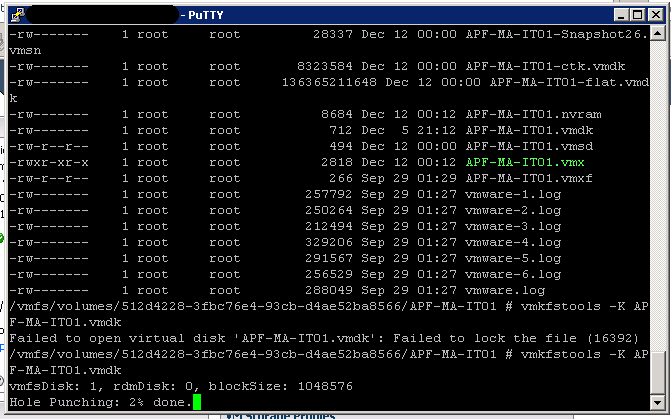
I vmkfstolos you found this article interesting, kindly feel free to share this on social media if you feel this is going to help other folks. Again, like with deleting vmdk files, when renaming it is better to use vmkfstools rather than the mv command, as this renames both of the relevant.
Inflating a Virtual Disk This option converts a thin virtual disk to eager zeroed thickpreserving all existing data. To create a thin provisioned virtual disk we need to use the diskformat option, vmkfstools -c 5G —diskformat thin testdisk2.
VMKFSTOOLS Examples – Working With Virtual Disks
Running it without any arguments will show the following: Start by listing the partition table on the disk where the VMFS volume you wish to extend exists: However the vsphere desktop client will not add anything over 4TB to the VM.
This option converts a thin virtual disk to eager zeroed thickpreserving all existing data. Now we have the thin provisioned clone, we may want to delete the original virtual disk.
October 22, 0. It is a recommended practice to rename the Virtual Disk using vmkfstools and not to use mv command. First of all we need to create a partition on our new disk. VMware recommend using the vSphere client for creating any new VMFS datastores, but if you do have reason to create one from the command line, this is how it is done. That is all we have for today.
After you're done and list the VM from within the console, it looks like nothing has changed, in this example the disk is 10GB in size. As a result, we end up with 2 files — the virtual disk descriptor vmkstools, and the virtual disk itself: Every command in the vSphere CLI has some amazing help written for seeing what options are available when vmkdstools the command. This weblog does not represent the thoughts, intentions, plans or strategies of my employer.

Renaming a Virtual Disk using vmkfstools Finally, and to complete this post, I will rename the cloned vmdk file so that it reflects the original name.
Cancel reply Leave a Comment. So let us run the command with the help parameter to see the Virtual Disks options available for us.
We recommend the following: Keep up to date with new posts on Buildvirtual. We'll assume you're ok with this, but you can opt-out if you wish. Delete a Virtual Disk using vmkfstools Now we have the thin provisioned clone, we may want to delete the original virtual disk.
This is done by running vmkfstools -U test2. Running it without any arguments will show the following:. One would be the flat file and the other one would be the descriptor file.
You would now see that there are two disks created.
Comments
Post a Comment